

Do dress codes at school violate the First Amendment?

Not only has every parent in America been asked at some point why their kid can’t wear what they want to school; so have the nine justices of the U.S. Supreme Court. As a result of a decision they made in 1969, you may be attending a school with a dress code, uniforms, or strict rules about T-shirts and protest buttons.
The First Amendment and Student Freedom of Speech
The case was called Tinker v. Des Moines Independent School District*. During the Vietnam War, a group of parents in Iowa decided to protest the war by wearing black armbands around town during the holiday season. Fearful that the parents′ children or other students would do the same, the Des Moines school district passed a policy prohibiting all students from wearing armbands. Any student wearing one to school would be asked to remove it, and if he or she refused, suspension would follow.

Photo by Jesse Millan
Several students, including John (age 15) and Mary Beth Tinker (13), and their friend Chris Eckhardt (16), wore armbands to school and were suspended. They challenged the school’s policy and filed a civil rights lawsuit claiming their free speech rights had been violated.
The Supreme Court crafted a test that still determines whether students′ freedom of speech and expression can be restricted. The court emphasized that students are “persons” under the Constitution in school as well as out of school. As persons, their fundamental rights must be respected by the state.
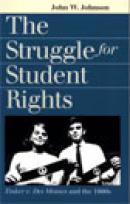
Mary Beth & John Tinker from John W. Johnson’s book
The First Amendment protects not only pure speech but also symbolic speech, or nonverbal means of communicating ideas, such as a shirt with a slogan, or a pin or button. Since the armband was a form of symbolic speech, it was protected by the First Amendment. However, the court determined that a student′s freedom of expression at school isn′t unlimited. If the expression is either “materially or substantially” disruptive to the normal course of events at school, or if it impinges on the rights of others, it may be restricted.
School Dress Code Policy
- A 12-year-old 7th grader from Missouri (Amelia Robbins) was suspended in August, 2008 for returning to school with pink hair. She dyed it in honor of her father who passed away from cancer.
- A Kentucky eighth grader was suspended from school in 1996 for wearing black lipstick.
- An Ohio middle school has banned baggy, low-slung pants as a safety hazard. Too many boys were tripping at school. In May, 2008 a federal court approved a public school uniform policy for all students – khaki-colored bottoms with a solid red, white or blue shirt with or without the school’s logo – no other logos or messages. Kimberley Jacobs, an 11th-grader challenged the policy after 25 days of suspension for violating it, and the court said that her right to free speech, freedom of expression or due process rights were not violated (see Jacobs v. Clark County School District, May 12, 2008).
- In Memphis, Tennessee, 45-year-old Kenneth E. Bonds got into an argument with three teenagers outside of his home over their saggy pants. When they refused to pull them up, he took out a semi-automatic pistol and shot at them as they ran away. One of the teens was hit in the buttocks, but suffered minor injuries. Bonds was arrested and charged with aggravated assault in the September, 2010 incident.
- In May, 2014, 160 students at Duncanville High School in Texas were suspended for various dress code violations. They included piercings, nose rings, large belt buckles, untucked shirts and not shaving.
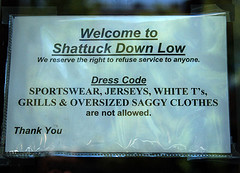
Photo by Donnaphoto (Flickr)
Should schools have dress codes or uniforms?
In Tinker, the court held that simply wearing a black armband wasn′t disruptive to school activities or the rights of other students. This decision opened the door for numerous challenges regarding student activities on campus. As a result, students may not be forced to salute the American flag or recite the Pledge of Allegiance, since these are protected symbols of speech.
Under the Tinker test, schools may prohibit certain items of clothing if it can be shown that wearing them is disruptive to the school environment or creates discipline problems. Recently, certain colors, gang insignias, some sports logos, or displays of profanity on clothes have been banned. Generally, if a school′s dress code promotes discipline or good health, it will survive a legal challenge.
The same principle applies to hairstyles at school. The Supreme Court, in Olff v. East Side Union High School District (1972), said,“One′s hairstyle, like one′s taste for food, or one′s liking for certain kinds of music, art, reading, or recreation is certainly fundamental in our constitutional scheme. . . .” However, if a school regulation (such as wearing a hat or hairnet when working in the school cafeteria, or around machinery in metal or wood shop) is related to safety or personal hygiene, it may be upheld as valid.
These rules also apply to private schools if the school receives any federal funding for programs or students. Otherwise, a private school may set its own rules as long as the rules don′t discriminate on the basis of race, gender, religion, or nationality.
Aside from the legal arguments about dress and personal appearance, there is also your parents′ authority to set the rules. Regardless of what is or isn′t allowed at school, if your parents have rules about your appearance or dress, you′re expected to follow them.
*Tinker v. Des Moines Independent School District, 393 U.S. 503 (1969).
You can find further discussion about Chris Eckhardt and the Tinker children in “Teens Take It To Court – Young People Who Challenged the Law and Changed Your Life” (2006); also in the New York Times Scholastic magazine Upfront.
Dress Code Court Cases
In February, 2008 a California federal court upheld the hate speech policy of Poway Unified School District. In 2004, Tyler Harper wore a T-shirt to school that read on the front “I Will Not Accept What God Has Condemned” and “Homosexuality is Shameful, Romans 1:27” on the back. This happened when the school was observing a day of silence to raise awareness of prejudice against gay students. When asked, Tyler refused to take the shirt off and was sent to the principal’s office for the rest of the day. The court ruled that the shirt infringed upon other students’ rights more than removing it infringed on Tyler’s. [see Harper v. Poway U.S.D., 345 F.Supp.2d 1096 (Cal. 2004)]

Heather Gillman
On the other hand, a Florida federal court ruled on May 13, 2008 that a school district was prohibited from punishing students for expressing support for gay rights. Ponce de Leon High School student, Heather Gillman and others, wore T-shirts with such slogans as “I support gays” and “Gay? Fine by me?” Eight students were suspended and Heather successfully challenged the school’s policy.
In March, 2019, a federal court ruled against a charter school in North Carolina whose dress code required girls to wear skirts only. The rule was challenged by the parents of three girls and the court sided with them finding that it discriminated against girls who wanted to wear pants. One mother commented “”All I wanted was for my daughter and every other girl at school to have the option to wear pants so she could play outside, sit comfortably, and stay warm in the winter.” Pants allow the girls to play sports at recess, climb, and avoid teasing by boys for exposing their undergarments. Good call, judge!
On the lighter side, in April, 2008 Pineview Elementary School in Wisconsin held its annual Wacky Week. Students were encouraged to dress either as a senior citizen or a member of the opposite gender. All in fun, right? Some folks objected as this was an affront on family values. (???)
In October, 2007 the Louisiana town of Port Allen banned saggy pants in public. They joined seven other Louisiana communities in prohibiting this style. The law requires pants to be secured at the waist, and not fall below the hips or expose underwear. Violators will be fined $25 to $250. In July, 2011, the town of Hampton, Georgia passed a law imposing a $50.00 fine for wearing saggy pants. A second violation merits a $100.00 fine and for a third infraction, a $200.00 fine. In June, 2013, the town of Wildwood, New Jersey banned drooping pants with a fine between $25 and $200 and 40 hours of community service.
In 2018, the Lake Havasu City, Arizona school district implemented a policy banning shabby clothes at school. It includes wearing torn, tattered and frayed clothing to school and pants or shorts with holes.
On Coke in Education Day at Greenbrier High School in Georgia, senior Mike Cameron wore a Pepsi shirt for the group photo that spelled out “Coke.” For being “disruptive and rude” he was suspended for a day. Pepsi called Mike a trendsetter and supplied him with additional shirts. Coke considered it a prank and was not offended.
If you think getting suspended or sent home for a dress-code violation is strict, consider this: In July, 2009, 10 women at a cafe in Sudan were arrested and publicly flogged. Their crime? Wearing pants in public which is against Sharia law.
Regardless of age or job, dress codes may apply to you. In 2009, a federal judge in New York ruled against a lawyer who wore jeans and an Operation Desert Storm baseball cap to court. The court ruled that it wasn’t the message on the cap, which would have been viewpoint discrimination, but all caps were prohibited. The dress code merely enforced “commonly shared mores of courtroom civility” wrote the judge.

Would wearing hoodies out of protest againts the education system fail the tinker test.
Dear Jason: Under the Tinker test, as you know, a student has to either substantially disrupt the educational environment, or violate the rights of another student. So, the exact circumstances regarding the wearing of hoodies to school in protest of your education system may either pass or fail Tinker. Here is an article we wrote about this concerning students at all levels of education;
http://askthejudge.info/wp-admin/post.php?post=10408&action=edit
Tinker is also included in the latest edition (April, 2019) of “What Are My Rights: Q & A About Teens and the Law” from Free Spirit Publishing (or on Amazon).
Thanks for your question.
(This is information only – not legal advice).
Does a school dress code prohibiting a student from wearing a presidential campaign shirt violate the students first and fourteenth amendment rights?
Dear Selena: As you may have read in our post about dress codes, schools have the authority to ban certain types of clothing (tube tops, mini-skirts, saggy pants, etc.) as well as messages on t-shirts, buttons, patches and the like. Anything that is controversial or may cause a disturbance at school can be regulated by school officials. As long as the rule applies to all students equally and is not discriminatory, it may pass a challenge from a student or parent. We suggest you talk this over with your parents who may want to meet with the principal to further discuss. Good luck.
(This is information only – not legal advice).
Here are my issues at my school….#1 7th and 8th grade girls can’t wear headbands/bows. #2 students can’t their jacket around their waist. #3 they have to wear khakis and polos (ok) but the girls are constantly criticized because they are too tight in the butt/thigh area. Regardless of their size or build, they want you to be able to pull the fabric out 2 ” from the body. No “skinny jeans” is the written rule.
Dear Kristy: First, thanks for writing us. You’re not alone. Many students disagree with their school’s dress code. However, schools are allowed to set their own rules as long as they don’t discriminate against a student or group of students. For example, if a rule banned boys from wearing T-shirts with messages, but allowed girls to wear them, that rule may not stand against a legal challenge. Students must be treated equally. Take a look at our post on this subject:
http://askthejudge.info/do-school-dress-codes-violate-students-first-amendment-right/
(This is information only – not legal advice).
One thing I can’t understand is the ban of leggings (in NNPS, Virginia district). Apparently, the reason is because males will be too attracted to a girl’s legs. But hormone wise, they’ll do that regardless of leggings. Some taller girls and girls with medical conditions, need to wear them! Shouldn’t the people promoting the sexual side of it an starting get suspended, charged, or etc. with sexual harassment? We’re only trying to look professional, have flexible clothing, and be comfortable. We’re not wearing them in any sexual manner, so why do we get in trouble? It’s the people staring and promoting it who are making them bad.
Dear Chloe and Alyssa: You make some excellent points. Unfortunately, there have always been issues with schools prohibiting (often female students) from wearing certain types of clothing because of the male distraction issue or being “disruptive” to the educational environment. We suggest that if you feel so strongly about this, consider circulating a petition among students and teachers for signatures asking the principal and other administrators to reconsider the dress code and allow leggings. You never know, some students that have made an issue about a matter important to them have seen positive results. Good luck.
(Check our Teen Help Network for more help and resources in your area. This is information only – not legal advice.)
Dear Ask The Judge,
I have undiagnosed SPD, so I dress differently. With school dress codes getting more severe is it okay for people like me that have Sensory Processing Disorder to violate our school dress codes? We can’t function properly (I guess that’s the best way to put it.) If we’re not wearing comfortable clothes. I’m not in a Special Education School because I was able to pass the Talented And Gifted Test. I can’t adjust to new clothing and have to alter my clothes! A few teachers know I have it, but we just got a new administration team and because I’m undiagnosed and went through therapy “I don’t count.” I’m nervous now that I won’t do well in school because I’ll have too many dress code violations. because of my sensory issues. Diagnosed probably counts but what about the people struggling? Are exceptions made or do we have to “suffer”?
Dear Ariana: We’re sorry to hear about the extra stress you face with a new administration. We suggest that your parents/guardian make an appointment with the principal and teachers to explain your SPD. Their empathy and understanding of the disorder may enable them to permit you to dress your way without obtaining dress code violations. Good luck.
(This is information only – not legal advice).
thxs for doing my work
true , uniforms should be banned
Thank you, Sarzz, for your comment. -ATJ.info
No more uniforms??
Dear Ask the Judge,
My high school is very stir it about our dress code, and to me the dress code isn’t fair. I love wearing skirts and dresses, but they are not allowed to be more than 4 inches above our knees. Some of mine are a tiny bit shorter, and I still get in trouble for something that is barely too short. Also, I am tall, and thin, so I have long legs. I have to wear size extra small, which tend to be a little shorter (because shorter people are expected to wear smaller sizes?), but I don’t think I should get busted for it- I can’t help my physical body! If I get busted for wearing something that’s not even three quarters of an inch too short, can I plead the first? You know, if they can’t offer irrefutable evidence that it disrupts education?
Dear Makenzie: You’ve probably heard the expression “rules are rules.” Well, that applies here. Schools are allowed to have dress codes and, as long as they don’t discriminate against a student and are applied equally across the board, they must be followed. Your issue with an inch or so won’t meet with success if you challenge the rule. There has to be a cut-off somewhere and your school has decided it’s at four inches above the knee, regardless of your height and build. Get used to rules since you’re preparing for a future where’s there’s no escaping limits and restrictions. Good luck and thanks for writing us.
(This is information only – not legal advice).
is it fair/legal to dress code a 16 year old for their shorts AFTER school? when they are waiting to be picked up? another question.. the dress code states a child serves detention after 3 dress codes, but the principal issued my child a detention after one dress code just because she felt like it, the shorts were barely too short. is that legal??? unfair treatment right?
Dear Hannah: Since your daughter was still on school property at the end of the school day, it’s possible for her to be in violation of the dress code. Check the Student Handbook (it should be available through the school’s website) to see what it says specifically about the dress code rules. If it clearly states that 3 violations result in detention and this is your daughter’s first violation, you could ask to meet with the principal or vice principal to further discuss this. Good luck.
(This is information only – not legal advice.)
Dear Ask The Judge,
This year our school got a new principle who therefor had a different outlook on things. She implemented a new dress code saying that we cannot wear yoga pants. I do not actually own yoga pants but also have nothing against them. The new rule doesn’t affect me but it does many of my friends who have been risking their behinds on wearing yoga pants even if its against the rules. I was curious to know if the school has any reason to be able to in force this rule. Yoga pants aren’t distracting and they aren’t gang related. They don’t have violence or weapon symbols and don’t set people apart form others. I simply don’t think its fair to say that these aren’t okay.
Also she implemented a rule that says and i quote “if it looks like a duck, if it acts like a duck, or it sounds like a duck, it is a duck” She put this into act when she decided that the boys couldn’t wear skinny jeans, to protect them from hazing related to being gay or a fag. After this was implemented, many parents got upset about this so she decided that girls couldn’t wear skinny jeans either. So they wore jeggings and yogas and everything else. Causing her to implement the duck rule.
In my mind the only difference between skinny jeans and regular jeans is that skinny jeans aren’t only tight in the waist and thighs but through the ankles as well. If you think that skinny jeans are distracting, which they aren’t, then you should think that regular boot cut jeans are distracting too.
I am putting together a group of students to help re negotiate the dress code. I think it would help if the dress code was thought through with input from the actual student body, as in a representative from each social standing.
Your help is much needed.
Sincerely,
WeStCeNtRaL_StUdEnTs
Dear West: Schools may legally implement a dress code that does not discriminate against students. In other words, they need to enforce the rules equally but can ban what they think is inappropriate clothing and jewelry, etc. that may cause a disruption on campus. You may not like what’s banned or question the school district’s reasoning for certain bans. Taking action as you suggest is an appropriate response to your issue with yoga pants and skinny jeans. Discuss this with the powers that be and maybe an agreement can be reached acceptable to both sides. Otherwise, you may have to live with their rules. Discuss this with your parents as well for advice about challenging the rules. You can also check the Student Handbook for the proper way to discuss an issue with the administration. Good luck.
(This is information only – not legal advice).
The school just this year change to a uniform dress code, Orginally they said that as long as the pants were khaki color they could be any type of pants and any color polo shirt. They didnt mention having to where a belt, and i didn’t think much about it. So i brought pull-up pants with no bell hoops on them since my child has problems with button up pants. Now i being told that he has to wear a belt or they will put a ziptie on the children if they dont have a belt on. Can they legally put a ziptie on a child?
Dear Melissa: It sounds like the school is battling a “saggy pants” issue on campus. Schools do have the right to have dress codes as long as they don’t discriminate against the students. Read the policy in the Student Manual for the details. They may require some sort of belt substitute if a regular belt isn’t worn. This could include a ziptie but it’s doubtful if they would actually put it on the student. That may be going too far. We don’t provide legal advice to our readers. If this actually happens, talk with a lawyer who practices education or school law. Good luck.
(This is information only – not legal advice).
Sir or Madam,
My daughter’s friend was told by the school’s dean and assistant principal to turn her sweatshirt inside-out because it bore the name of another high school in our district. This has happened twice this year. Is this legal? thanks!
Dear Christopher: First, you need to look to the school’s dress code policy, which you should be able to find in the Student Handbook. If all clothing with any words, logos, etc. are prohibited, for example, then there most likely would not be any violation of students’ First Amendment rights. After reviewing the dress code policy, there continues to be concern that the school is not acting appropriately and may be violating the student’s rights, then the parents should request a meeting with the dean and/or assistant principal to discuss the matter. Finally, a consultation with an attorney who practices education law could clear things up if all else fails. A local legal aid office may be able to assist as they often help with school related matters. You can check our Resource Directory for a legal aid office near you. Good luck.
(This is information only – not legal advice.)
My child’s school implemented a uniform dress policy a few years ago and, after fighting a losing battle with the school board and watching my daughter cry over what she felt was punishment, I moved her to a different school. Now that I am in law school, I am writing a research paper on the (un)Constitutionality of strict dress codes for public schools. My first complaint with these policies concerns the child’s choice of what to wear. My oldest daughter wanted to wear something new from her grandparents who lived out of state, which caused some separation anxiety. My second daughter wore mostly hand-me-downs, but they both had wardrobes that relied on family donations. Has anyone ever filed a lawsuit claiming that these policies are unfair to poor, struggling, single-parent households? In addition, this school had chosrn to allow students to uniforms that had a particular plaid design, which was not available in resale shops. This meant the children who wore that plaid were easily identified as “having money”. The school allowed logos on clothing also, which would mean name-brand uniforms could set apart the poor children. The school allowed certain colors for the shirt which I felt could show false support for certain gangs. Do you know of any caees in which this argument was used? At the time, I had read about a girl in California who was shot because of such a mistake. My daughter was attending a school in a heavy gang activity area, which only added to my concerns at that time. Since we have moved, I have learned about other children who were suspended for dying their hair with blue streaks and a black girl who was suspended for having her hair braided in corn rows. I have been told that dreadlocks, corn rows, and afros are also banned in that school district. Do you know of any cases that claim disparate impact or treatment? Thank you for the information.
Dear Ann: On AsktheJudge.info we have written many times about dress codes and freedom of expression at school. Take a look at some of the cases we’ve mentioned. You can also look at the First Amendment Center and the ACLU websites for cases that have gone to court. The U.S. Supreme Court hasn’t taken up school dress codes per se, preferring not to micromanage the country’s public education system. You can also contact a local First Amendment lawyer to discuss your concerns.
(This is information only – not legal advice).
I have a question.
Our school district put a new ‘dress code’ in place this year, but it is very confusing, and very subjective. When the kids are found to be in violation, they are being held from classes until a parent comes with a change of clothes? Is this legal? The idea of being at school is get an education.. not sit in an office because your jeans are white.
Dear April: Schools have broad authority to discipline students for violating the school rules including the dress code. You’re right about the school’s mission being that of educating students. But following the rules is part of preparing youth for the real world once you graduate. Since you know the rules, whether you agree with them or not, you’re expected to follow them or suffer the consequences. Good luck.
(This is information only – not legal advice).
Ok get this im in iss for those wo dont know what that is its (in school suspension) and i got in here because of a whole in my pants right on my knee about the size of a nickel im in here for 3 days all beacuse my school is to strict
Dear Tristan: Schools have dress codes with consequences for violations. Check your Student Handbook for the specific rules in this situation. This is a valuable lesson for the future.
If it’s allowed as long as it applies to everyone equally, wouldn’t that be like saying they’re violating all of our rights equally? What other reasons would there be to outlawing casual attire in school? If it’s because it prevents people from judging how someone dresses because we all dress the same then I would say that that still happens regardless. Not that’s a valid argument, but what they’re aiming for seems a little “overshot” because the things they are trying to prevent wouldn’t require this amount of action to do so. I’ve played a bunch of arguments in my head to try and compromise the issue, for example, let us wear jeans as long as they don’t have holes in them or cargo pockets, they can’t be excessively tight or baggy. Shirts may not require a collar on them but still no large emblems or decals on them. I could be overlooking some things of coarse but I also see where some leniency could be made with the dress code apart from where it stands now.
Dear Quinten: You might get somewhere in discussing this with the administration. But don’t expect them to immediately change the policies. Change comes with deliberation and reasoned consideration of all sides of an argument. All the best.
(This is information only – not legal advice).
I’m a senior in high school, and at my school you must wear Khaki pants(can’t have cargo pockets) and a shirt with a polo and may not have any excessively large logos on it. If you wear a button up shirt or a zip up fleece you must have it fastened 3/4 of the way up. You can’t wear all black, all blue, or all red. Shoes must have a heel to them(so nothing like sandles or anything. They just added this dress code 4 years ago and they are enforcing it very hard. I completely understand some of their views on trying to eliminate gang influential clothing, but not being able to wear jeans or a plain shirt seems kind of over board. They aren’t distracting to the learning environment unless they’re extremely baggy or tight so i don’t see the point. If the clothes aren’t supporting use of alcohol or show explicit content on them then is it constitutional for them to enforce such a strict dress code at a public school? If so why?
Dear Quinten: You raise some good points about dress codes in public schools. It’s a fairly new practice in schools across the country that has been challenged in court. Legal rulings by judges have, for the most part, upheld the dress codes as long as they’re applied equally – without discriminating against a group of students either by gender, age or class. In other words, a public school can have a dress code for girls but not for boys. One of the reasons dress codes are permitted is to allow the school to do it’s constitutionally mandated job: to provide a safe, hostile-free environment to educate students. The presence of gangs with identifying logos, colors, etc. is a small part of the reasoning. We could go on, obviously, but instead refer you to some of our posts on the subject here. Thanks for writing.
(This is information only – not legal advice).
I read about the Tinker case in school for a project, and really learned a lot. It made me relize that the school really is trying to control us. I’m a sophmore in high school and I am a very out going person, but i can’t be myself at school because of dress code.
Dear Anna: A dress code shouldn’t change your personality or who you are. It’s just a few hours each day. There will be rules you’ll have to follow no matter what you do with your life. They alone shouldn’t change the real you. So, as they say, grin and bear it.
(This information only – not legal advice).
I would hope you agree that children are our future, with in that belief for me, i see the voices of high school and teens very important. Our legal and political systems are shaped by the teens of an older generation. I ask you , why prohibit any chance a voice could heard and a message learned. I saw in my own life the more i was exposed to earlier in my life the better off I was. ( in making appropriate designs). Why prevent a learning or growing experience? at some point or another children become adult and learn to use their voice, I say listen to the passions of the future to know the direction of today. Would you agree?
Dear nOwhere Inc.: Thank you for your comments. The U.S. Supreme Court agrees that constitutional rights including free speech apply to students and that students do not “shed their constitutional rights to freedom of speech or expression at the schoolhouse gate.” For more about this famous case, check our the Tinker decision. However, the Court also has acknowledged that students’ free speech rights are not unlimited.
[This is information only – not legal advice.]
This is just a side comment about the Pepsi on Coca-Cola day story. Greenbrier High School is spelled with an “e” instead of an “a”.
Dear Wendy: Thanks for your message. We’ve made the correction. Have a good school year.
Okay, I have a question that I hope somebody out there can answer for me. My teenage daughter has a genuine medical condition called hyperhydrosis…her sweat glands are overproductive. Like, extremely way overproductive. From the first part of the school year to about December 1 of each year she wears tank tops. If she were to even wear t-shirts her sweat glands would kick into high gear and she would be coming home at least 3 times a day to change her shirt, as she would have sweat stains down to her hips. Not to mention the rash from the sweat. This has been going on for several years. Well this year the school changed their dress code policy and decided that only tank tops with two inch wide straps would be allowed. Only they did not bother to tell the parents about the change until the first day of school. Well after I had done her school clothes shopping. Most of her tank tops have only one inch straps. So I contacted the vice principal and suggested a compromise, I told him that I would have her safety pin her bra to the shirt so that the bra strap could not be seen. He said okay. But the dean of students disagreed and now is telling me that my daughter will be suspended if she comes back with a tank top that has less than a two inch width on the strap. I explained everything to him, including the fact that I do not have the money to buy her a second set of clothes for the school year, and he basically said too bad. I even got a note from the doctor and he said he will not honor that doctors note. Do I have any legal recourse here? I can’t believe they are giving me all of this drama over a tank top.
Judge Tom’s response:
It would seem that reasonableness should prevail over going to court over this. Courts across the country often disagree when it comes to enforcing school dress codes versus student freedom of expression. Added to your side, however, is the medical condition backed up by a doctor’s note. Hopefully, you can reach a compromise that is satisfactory to all without having to file a lawsuit. Good luck.