

Can schools force students to submit to drug testing?

The issue of drug testing in schools concerns everyone on campus. While in session, your school is considered to be your temporary guardian. In that capacity, the school exercises a degree of supervision and control over you. This may include a blood or urine test to check for alcohol or drug use.
In addition to offering the standard courses, your school may sponsor a variety of clubs, organizations, and sports. There is no law that automatically entitles you to participate in these activities. A student right is not the same as a student privilege. The school may legally set standards for participation in the activity, including a minimum grade point average, a clean record regarding school infractions, or an initial (and/or random) drug test.
Supreme Court decision on drug testing in schools
Like many other schools, the Vernonia School District in Oregon adopted a Student Athlete Drug Policy, which authorized random urinalysis drug testing of students who participated in sports. The policy was adopted in the face of increased discipline problems and drug-related injuries to student athletes. The purpose of the policy was to prevent the use of drugs, to protect the students′ health and safety, and to provide assistance for avoiding or quitting drugs or alcohol.
- 25% of students say it′s easy to obtain beer, wine, marijuana, or other drugs at school.
- Incidents of physical attack, robbery, and bullying at school increase significantly with the pressure of drug dealers at school.
Source: Juvenile Offenders and Victims: A National Report, National Center for Juvenile Justice (1995), with 1996 Update on Violence
In 1991, the District′s policy was challenged by James Acton*, a 12-year-old seventh grader who signed up for football but refused to sign the drug testing consent forms. James testified in court that he didn’t want to submit to drug testing “Because I feel that they have no reason to think I was taking drugs.”
After a four-year legal battle, the U.S. Supreme Court ruled in support of the school’s drug testing policy. In fact, Justice Ruth Bader Ginsburg wrote that consideration should be given to extending the random testing to all students, not just athletes. Some schools are using a low-tech version of the police breathalyzer to screen students attending school dances and graduation night parties.
The expectation of privacy that adults enjoy is somewhat lessened for minors in the school setting. There are certain intrusions into your privacy that go along with attending school. These include physical examinations, hearing tests, eye tests, and dental screenings.
Student athletes should expect even less privacy due to the nature of school sports—public locker rooms, suiting up together, etc. By choosing to go out for the team, students voluntarily subject themselves to greater regulation than is usually imposed on students.
In applying the reasonableness test, and by balancing the school′s interest in a peaceful campus against the limited surrender of a student′s privacy, the court determined that random drug testing for athletes is constitutional: “Deterring drug use by our Nation′s schoolchildren is . . . important.” The results of the tests aren′t made public, nor are they sent to the police for criminal prosecution. Deterrence and rehabilitation are the policy′s goals.
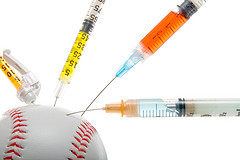 What about a school drug testing athletes for use of steroids? A few testing programs in U.S. high schools between 2005 and 2008 show that steroid use by student athletes is not widespread.
*Vernonia School District v. Acton, 515 U.S. 646 (1995).
You can read more about James and his case in “Teens Take It To Court – Young People Who Challenged the Law and Changed Your Life” by Free Spirit Publishing (2006).
Update: A report issued in August, 2011, by the Annenberg Public Policy Center of the University of Pennsylvania shows that random student drug testing has no deterrent effect for boys and limited effect on girls. Approximately 20% of public high schools have such policies in place. The 14 to 19-year-old male students surveyed reported no less use of alcohol, marijuana or cigarettes in schools with drug testing than those in schools without drug testing. Effectiveness for girls was seen only in schools with “good social climates.”
Resources to check out:
The National Institute on Drug Abuse provides brain games, real stories and facts on drugs.
The Substance Abuse and Mental Health Services Administration of the U.S. Dept. of Health provides a locator service for treatment at: 1-800-662-HELP

My school random drug tested me when I playing football and I failed, but since I’m no longer in sports or any extracurricular activity, does the school have the right to still drug test me? Being that I’m no longer involved with UIL
Dear Josh: That depends on the specific rules at your school regarding drug tests. As you may know, public schools are authorized to test athletes and students in extracurricular activities. Take a look at your Student Handbook. There may be a rule in place that covers your situation. If you don’t have a copy of the Handbook, check the school’s website or ask for a copy in the front office.
(This is information only – not legal advice).
My daughter’s school wants the parents to sign a consent form to do random drug testing. They have also stated that if I do not sign this form she will not be allowed to participate in any sports or extracurricular activities. I have an issue with someone administering a drug test on my child. I don’t mind taking her to go get one but I don’t want the school giving it to her. Is it legal to deny a child to participate in any activity if I do not sign this consent form?
Dear Veronica: The issue you raise was before the Supreme Court many years ago. It was decided that public schools may adopt a random drug testing policy for student athletes and other students who participate in band, clubs and other extracurricular activities. For more information about the procedure at your daughter’s school, talk with the administrators at the school. You can also read our post from a few years ago on this subject. See it here.
Good luck.
(This is information only – not legal advice).
My son was found with a small amount of marijuana in his pocket at school last year. One of the stipulations for him to be able to return to this public high school in the fall will be that the school administration can give him random drug tests at any time and that I have to pay for them. My insurance doesn’t cover random drug tests and I’m on the free lunch program and don’t have the money to pay for it within 48 hours as will be required. Is it legal to keep a 17 year old out of the public high school in Illinois because his mother can’t afford random drug tests?
Dear Jane: We understand your concerns as it sounds like the additional costs are going to add financial stress and hardship for you and your family. Since your son violated the school rules by his possession of drugs, it’s possible that they could impose such a random drug testing schedule for him. However, based on your financial situation, you would need to consult with a local attorney who handles education law and/or civil rights matters in order to find out if the school is violating his rights at all. Many attorneys offer a free initial consultation. In addition, you could try contacting your state’s ACLU office as they may be able to offer some information and assistance for free. Finally, talking to the school administrators about your financial circumstances could help in establishing a plan that works for all of you. Good luck to you and your son.
(Check our Resource Directory for more help and resources in your area. This is information only – not legal advice.)
I have failed a urine screen about 2 months ago (taken by my asshole public therapist who has reported me right after) and since then I have became clean and even had my urine screened with negative results about 2-3 weeks ago (taken right before I was discharged from being hospitalized for depression). However, out of the blue, my student social security worker demands a urine screen asap when I’m not even on probation. I know I will pass it but i’m getting a little ticked off by her constant questioning of my “cleanness”. Is it even legal for her to make such demands and will I get in trouble if I refuse in the future?
Dear Jenna: We’re not exactly sure the role that your social security worker is playing. It’s possible that drug tests may be part of the requirements if you are receiving government benefits. You can simply ask this person about your right to refuse or ask a supervisor at the office. Other options may include asking your parents or school counselor if you are a minor. Good luck.
(Check our Resource Directory for more help and resources in your area. This is information only – not legal advice.)
how many drug test can a public school give
Dear Jacob: That depends on the policies established by the school district for the drug testing of students. Take a look at the school’s Student Handbook for information on this. There is no set number that applies nationwide. The Handbook may be on the school’s website.
(This is information only – not legal advice).
Is it legal for a social worker to come to my sons school and piss test him without me even knowing?
Dear Braden: That depends on the circumstances. If your child is on probation or under the jurisdiction of the juvenile court, it may be legal for such a test at school. Oftentimes, random drug testing is a standard term of probation. Or if your son is involved with a “diversion program,” the same holds true. Also if your son is a dependent ward of the court under a CPS case or private petition to the court, drug testing may be authorized. As you see, everything going on in your life and his has to be taken into consideration. Contact the social worker and ask about her authorization to do this. Good luck.
(This is information only – not legal advice).
My son, other than this recent situation, has not been in any trouble and is actually aspiring to enter into the Academy here where we live. He is concerned now his chance maybe marred with this mistake he has made and he is very upset. My 14 year old son made a real bad decision to take his knife he uses for Boy scouts to a school football game out of fear of another student, that has been picking on him for a few years. The other kid got a bunch of younger students to tell the principal and RSO that my son was trying to sell them drugs,(everyone that knows my son knows he isn’t the dealer and he doesn’t do drugs)
-they were friends of his sister, and when they spoke to my son they asked if he had a weapon on him my son said yes thinking about the knife. Now he faces suspension, he is so frightened. I don’t want this one mistake to be what actually keeps him from being able to have a future. I don’t have the means to do much for him. I have to take him to school Tuesday (tomorrow) to find out what will happen and we have been sick over this. The other kid has been slowly migrating closer and closer to him in lunch and now sits two seats away, my son is not feeling safe anymore. How can my son go to school and feel safe when the same kid that he had the RSO talk to last year to get away from him is stalking up on him at his lunch table. My son started off the school year changing classes as soon as he found out the kid was in his classrooms. And we deal with this kid in our neighborhood as well walking around in front of our house, all we can do is stay inside. He rides the bus with anxiety, last year I had to drive to school with his athletic gear because he couldn’t take it on the bus because of the harassment. My son’s father was abusive, and my son knows that until there is a physical altercation the sheriff can’t stop the kid from being around my son even at school.
Dear J: There doesn’t necessarily have to be a physical altercation before a judge will grant an order of protection or something similar against the kid. You could try contacting your local police department or even the court to find out more about what’s involved and required for a judge to grant such an order. Your son should keep a record of the date and the specific incident involved that made him feel unsafe in case you do take it to court. Having documentation of all the specific instances involving this other kid could also help your son when discussing the situation with the school administrators. He may want to speak with the school counselor as well which would also create some documentation as to what is occurring. Finally, check your son’s Student Handbook for the school’s anti-bullying policy. Most schools have policies in place that require action for instances of bullying. Good luck to you and your son.
(Check our Resource Directory for more help and resources in your area. This is information only – not legal advice.)
If the US Supreme Court ruled that schools have the right to perform drug tests on athletes, how is it that in WA State it was ruled that it was a violation of the state constitution and not allowed. I thought federal law trumped state law.
Dear Karen: Federal law does not always trump state laws. The Tenth Amendment covers this issue. The Supreme Court ruled in Acton v. Vernonia School District (1995) that public schools may implement a drug testing policy for student athletes. It did not require random tests but left the decision to have such policies in schools up to the schools and state legislatures. Likewise, when it comes to capital punishment, the Court ruled many years ago that the death penalty is not cruel and unusual punishment, but left the decision to impose such up to the individual states. As you know 32 states have the death penalty for adults while 18 and the District of Columbia do not.
(This is information only – not legal advice).
Ur posting, “Drug Testing in Schools” ended up being definitely worth writing a comment on!
Only wanted to point out you really did a fantastic work.
Thanks a lot -Avis
Thanks, Avis, for your comment. -Judge Tom.
Can a college require an athlete to take a certain drug test or can the athlete request an alternative test?
Dear Angalina: Under a Supreme Court opinion many years ago, random drug tests for student athletes and anyone participating in extra-curricular activities is permissible. It’s up to the school whether to have such a policy or not. An alternative test can be discussed with the school, but the school doesn’t have to agree to such. Good luck.
(This is information only – not legal advice).
So a student tested postive on monday from a drug test done at school with a range of 45, the lab ask the parent could the student be on any medicine. The student was tested by their parent at a hosiptal on thursday the test comes back negative. The student can play sports but their national honor society and senate was taken away. Where is the due process punishing a student twice for a test from a lab with margin of error but a test from a hosip
Dear Jill: The procedures and consequences that the school can impose regarding drug tests are spelled out in the Student Handbook or are available through the School District Office. Most likely, there is a process for parents who disagree with test results or consequences imposed following a positive test result. Otherwise, you can speak with a lawyer familiar with school or education law. Good luck.
(This is information only – not legal advice).
So, can public schools make non-athletes submit to random drug test with the student’s or their parents consent?
Dear Ben: The Supreme Court has approved public school policies requiring random drug testing for athletes and students involved in other extra-curricular activites (clubs, band, cheer, etc). The Court has not extended the policy to all students regardless of their participation in other activities or not. Public schools are not required to have drug testing policies, however. It’s a decision of individual school districts. If a school has a policy for testing athletes and students in extracurricular activities and a parent wants their son or daughter tested, it could be arranged with the parent’s consent. This would be unusual and we’re not aware of such an arrangement anywhere in the U.S. The parent would probably have to pay for the tests. If you know about a public school with this type of program, please let us know. Thanks for asking.
(This is information only – not legal advice).
My ex went to health and welfare and said I’m an unfit mom and I have a meth problem. I had two cops come into my home and laugh because my kids are just fine. Then not 30min later 2 narcotic detectives are at my door. What are my rights as to taking drug tests and letting every cop in town into my home?
Dear Crystal: Askthejudge.info is a teen law site providing information to teens about their rights and the laws that affect them. Therefore, we suggest you contact a local criminal attorney in your area who can answer your questions. In most states, if a person refuses consent to a drug test, the police will get a warrant to take a sample of the person’s blood if they have probable cause to believe the person is engaged in criminal activity. The same standard usually applies to the home. You can refuse to let the police in your home if they don’t have a warrant, but if they have probable cause, then they will attempt to get a search warrant signed by a judge and search your home. Again, a local attorney can provide you more information based on the laws in your state. Good luck.
[This is information only – not legal advice.]
If a urinalysis is positive for drugs, can the school alert the police to the student? And if so, could the test be used as evidence in order to try to bust the student?
Dear Benjamin: The school could report the positive test to the police but they rarely do. Most positives are handled at the school level – between the school, student and the parents.
[This is information only – not legal advice].
If I fail a bunch of drug tests for uncourt related organiztions is there anything they or my parents can do?
Dear Alex: It depends on your relationship with the court. If you’re already on probation or under the court’s supervision and the court becomes aware of positive drug tests, there may be consequences. The same as far as your parents – once they find out, they have the authority, in most situations, to discipline you. Rather than worrying about this, try staying clean so the rest of your life isn’t a series of troubles that you have control over. Good luck.
[This is information only – not legal advice].
If a student is in Juvenile Court for an offense not related to chemical use, shoplifting for example, can a Judge require clean UA’s as part of a sentence during the time period they are alotted to do community service?
Judge Tom’s response:
A great question, Tim. In most jurisdictions around the country, if the court places you on probation or you’re under the court’s direction for a period of time [for example, in a juvenile diversion program], they can order you to do a number of things including random urine tests for drugs. The bottom line here is what is in your best interests. If drug use or experimentation is in your history and the court is aware of that, then expect to test. All the best.