

Can my parents force me to follow their religion?
The First Amendment to the U.S. Constitution guarantees all Americans freedom of religion. This right is not limited to adults. Children and teenagers enjoy the same right, which is balanced with the fundamental rights of parents to raise their children without government interference.
What this means for you is that the government and the courts won′t get involved if you and your parents disagree about religious beliefs or practices. As long as you′re safe and your basic needs are provided (food, shelter, clothing, and medical care), the state can′t interfere with your family. Your parents are free to decide what church to attend, how often, and what practices will be honored in the home.
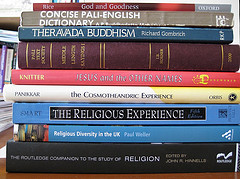
Photo by Paul Trafford (Flickr)
If you′re at risk of being abused or neglected because of your parents′ religious beliefs, the police or Child Protective Services (CPS) may step in to ensure your safety. For example, if you were in need of a blood transfusion or other urgent medical care, and your parents refuse to give their consent due to their religious beliefs, the court could get involved. In a life-threatening situation, or one where there′s a risk of permanent disability, the court has the right to order the appropriate medical care for you.
Occasionally, a hospital or doctor will contact the court to assist with difficult emergency cases. In 1994, the U.S. Supreme Court stated that parents may be free to become martyrs themselves, but they are not free to make martyrs of their children (Prince v. Massachusetts*).
In following that decision, a Minnesota court stated that although one is free to believe what one will, religious freedom ends when one′s conduct offends the law by, for example, endangering a child′s life” (emphasis added – Lundman v. McKown**).

Photo by Austin Frothingslosh
In the Minnesota case, an eleven-year-old boy was diagnosed with juvenile-onset diabetes. His parents were Christian Scientists, a religion that believes in prayer as the proper treatment for illness. The boy died because he was denied medical treatment. In discussing the difference between the freedom to believe and the freedom to act, the court upheld the government′s right to restrict acts based on religious beliefs. In other words, people can′t claim religion as a reason for not paying taxes, violating child labor laws, marrying more than one person at a time, or refusing medical care for their children.
In September, 2011, Oregon residents Dale and Shannon Hickman, both 26 years old, were convicted of second degree manslaughter in the death of their infant son. Born two months premature at home, David Hickman went into distress. Instead of seeking medical treatment, they prayed and annointed him with olive oil. David passed after nine hours. His parents are members of a faith-healing church where other parents have also lost children in similar situations. They were sentenced on October 31, 2011 to 75 months in prison followed with three years probation.
In a similar situation, Shannon Hickman’s sister, Sarah Mitchell, gave birth to twins in 2017. Sarah was 24 and her husband, Travis, was 21. The babies were premature and born at home. One of them, baby Ginnifer, had breathing problems and died at home. Medical help was not sought and the parents were charged a few months later with murder and criminal mistreatment. They pleaded guilty to negligent homicide and mistreatment and were sentenced in July, 2018 to six years in prison. The surviving child is in foster care.
As you get older and think about the role of religion in your life, talk with your parents. Share your ideas and feelings. Talk with your friends who may belong to different faiths. What is their relationship with their parents on the subject of religion? It won′t be long before you′re independent and able to worship as you choose.
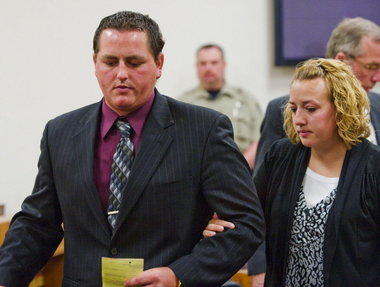
Dale and Shannon Hickman
*Prince v. Massachusetts, 321 U.S. 158 (1944).
**Lundman v. McKown, 530 N.W.2d 807 (1995).

Thank you for opening this conversation. As a parent navigating the current state of the world and feeling like my parental rights no longer exist when it comes to raising a child with my Christian beliefs, this article and the comments below it, have helped me confirm my stance and has given me the strength I need to keep fighting the system.
As parents, we typically raise our kids with the traditions and beliefs of our parents and their parents, and frankly, the founders of our country.
The government has become too present in those choices and has begun to give too much power to our therapists, teachers, doctors, community workers, counselors etc. in shaping the minds of our kids- overstepping and countering everything we have been fighting to instill in them. I’ve raised my children as Christian, not radical, just good morals and beliefs and biblical practice.
I am of the same belief that once they are 18, they can do and be whatever they want. How do I, as a parent, make it clear to the courts that I will not allow my 14 year old to take sex altering hormones? Why is this even an option for a child with an erratic and developing brain who can’t remember to brush their teeth or take their meds?
I am tired of parents being to blame for kids harming themselves and being depressed because we don’t allow certain behaviors- these children have been brainwashed by the rest of the world that their parents are abusing them when what we are doing is raising them with morals and standards that have been in place since the beginning of time and crosses the majority of religions. Until recently, parents had rights and raised us as they felt fit. Past generations have turned out fine. I fear for this current generation and future generations if we keep allowing government to create laws that throw aside all the morals and values we have worked so hard to build.
Dear Amy: You make some very good points, especially with all the issues facing Americans today. The founders couldn’t foresee 2021, so we have to stay calm, make the best decisions we can with relevant available information, and guide our kids toward a life of integrity, intelligence, and respect for others. It can be frustrating, but keeping an ongoing conversation with them and setting an enduring example by your actions will go a long way. As you know, our children watch and hear us in our daily lives. We are their models for good behavior, kindness and curiosity. Keep up the good work.
(This is information only – not legal advice).
y ex wife and I share legal & physical custody of our 14 year old son. My ex wife is Catholic and wants to raise our child as such. I am Christian and do not believe in all of the Catholic teachings and do not want to raise our son Catholic. Our order of custody is one week on one week off alternating. Recently while my son was with me for my week my ex wife stated I had to take our son to CCD and then Mass afterword. Our son had football practice and it was extremely hot and did not want to leave practice and to to church. I explained to my ex that we have different religious beliefs and while our son was with me I would not force him to go to CCD or Mass. Do I have the right as equal custody to refuse to force the Catholic church on our soon and not make him go to CCD or Mass when he is with me.
Dear Mark: AsktheJudge.info is strictly an information website for and about teens and laws that affect them. As such, we do not provide legal advice to our readers. Every state has its own laws regarding custody issues, visitation, child support, etc. and they differ from state-to-state. We suggest you ask a local family law attorney, or the person who represented you in your divorce action, if you had one. Also, your local family law court may have someone who can assist you in this dilemma. You, your ex-wife and your son have individual rights that must be respected to resolve this within the law. The court may also have a facilitator whose job it is is to answer these type of questions. Good luck.
This is stupid on all the comments you say the same thing .You have to wait till your 18 if not then you have to deal with it. THIS WAS NO HELP
Dear Jikayla: You’ll discover, as you get older and experience more of life, that not everything is perfect or the way you would like. If you disagree with something, do something about it. Take action to bring about positive change. That is your right. Complaining without action is wasted effort and gets you nowhere. Thanks for writing us.
(This is information only – not legal advice).
My mom is a solid Christian and my dad has no religion, I want to be Muslim for a while..can my parents legally stop me?
Dear C: As long as you’re under 18 and live with your parents, you’re required to listen to your parents. This includes decisions about religion and what goes on in your home. We suggest a calm discussion with your parents about your beliefs and how you’d like to follow your faith. Listen to each other and, hopefully, you can reach an agreement acceptable to each of you. Good luck.
(This is information only – not legal advice).
My parent and Grandmotherrestrict from getting antidepressants because we’re Christians. They tell me I need Jesus instead. They also use religion to make me hate being Trans and Gay. My Grandmother and Mother force me to be religious. They won’t let me get mental health because “prayer”.
Dear Leo: If you are a minor (under 18), the law requires that you listen to your parents. Once you’re emancipated by turning 18, getting married or joining the military, then you make your own decisions. So, make the best of life at home. Regarding your “mental health,” speak with a counselor at school. Maybe a meeting with your parents/grandparents can be arranged where all of you can calmly discuss this and reach an agreement. Good luck.
(This is information only – not legal advice).
If I tell my mom that I don’t believe that god created god and that’s was my belief and she told me that I had to believe that and it was sad that I don’t is that right for her not to let me believe in my beliefs?
Dear Angel: Try having a calm conversation with your mom about your beliefs. Respect hers and hopefully you can agree to disagree. Once you’ve expressed your position to her, it may be better to “go along to get along” as it’s often said. Once you’re an adult and out of the house, you’re free to live and believe as you choose. Until then, you’re expected to listen to your mom and follow her rules. Good luck.
(This is information only – not legal advice).
yo my mom and dad are beating my ass for not being Catholic and my mom does not want me anywhere near my brother and sister, my mom has me alienated and I am looking for help I don’t like getting up each Sunday to worship some sky daddy i don’t believe in, both of my parnets are mexicans but I was born in the US therefor I am an american citenship and I have my right I told my parents my rights and the thing is when I have an agreument with my parnies and i make a well thought out agerumment that is better than thers i have my proof and fack to prove them wrong they will just start saying things like you know what we are done stop or they most of the time say want me to beat you for being am smart ass even tho I am not trying to be one I am just trying to prove a point as to why I dont want to be religous.
Dear Salvador: Whether you agree or like the position you’re in, as long as you’re under 18 and live with your parents, the law requires that you listen to them. You’d be surprised how far a little respect for them, in language and attitude, may go. Try having a calm discussion about your thoughts, and listen to theirs. Maybe the three of you can agree to disagree about some things, and make the best of the situation as long as you live with them. Good luck.
(This is information only – not legal advice).
i am 18 but still in high school. i am waiting till i finish high to leave their house. my parents are trying to force me to go to church. legally can they kick me out or can i finish high school before they kick me out.
sorry for leaving a fake name
Dear John: In most states once you turn 18 you become a legal adult. That means your parents may ask you to move out and their legal responsibility to provide for you ends. However, some states the obligation to support a child only ends with high school graduation. You can google the name of your state and “child support duty” for details that apply to your situation. Good luck. It would be best to work this out amicably with your parents.
(This is information only – not legal advice).
My father is a Jehovah’s witness and forces my to go to their “Meetings” do i have to go or can i just tell him no and stay home?
Dear Joseph: Since you are a minor, your parents have the responsibility to raise you and take care of all of your basic needs including shelter. They get to make decisions about your upbringing including what church you attend and faith to follow. That means that you may be stuck having to go to the meetings with your father. We suggest you try talking to your Dad about your wishes and beliefs and have a calm, mature conversation. It’s possible that you can reach an agreement that will make you both happy. Good luck.
(Check our Teen Help Network for more help and resources in your area. This is information only – not legal advice.)
I’m 14 years old and I live in a catholic household. I’ve told my parents before that I do not believe in any god and wish to stop attending church. On top of that I’m am openly pansexual and do not feel safe or comfortable at the church. They keep trying to convince me that I’m safe in “the loving arms of the church” and “god loves me.” Even though there are countless and countless lines in the bible of which tell the followers to violate women and kill homosexuals. Are my parents violating my freedom of religion? Is there really anything I can do about it?
Dear Madeline: As long as you’re under 18 and living with your parents, the law expects you to abide by your parents’ rules. Of course, that does not include acts of neglect or abuse which are defined by specific laws protecting children. When it comes to religion, they are allowed to raise you as they see fit whether you agree or not. This is the time to calmly discuss your views with them and attempt to reach a position where you can live together recognizing and respecting your differences. As you get older you will be able to choose what, if any, religion you follow. In the meantime, be patient, open-minded to their views and polite. Good luck.
(This is information only – not legal advice).
Ok I am under 18 and living with my parents. I want to know if they can legally punish me for being atheist. They are not abusive or neglecting, but I am afraid they will no longer let me talk to my uncle if they find out I’m atheist. Please let me know asap
Dear Wind: As long as you’re a minor, living at home with your parents, they set the rules. Unless you’re abused or neglected, the authorities have no say in their beliefs and methods of raising you. It would be best for all concerned if you and your parents can have a calm discussion about your beliefs and their views. An open, intelligent exchange of positions can go a long way toward peace in the family and mutual understanding. Good luck.
(This is information only – not legal advice).
Are my parents allowed to take my phone away from me without my consent or permission?
Dear Sean: As long as you’re a minor (under 18) and living with your parents, they have the say in pretty much all you do. If they pay for the phone, their position is even stronger regarding its use. Have a calm talk with your parents about the issues surrounding your use of the phone. You may be able to reach an agreement acceptable to all of you. Good luck.
(This is information only – not legal advice).
I have a similar situation to Marilyn who commented below… I was raised in a Mormon household and have since rejected this way of life. I am still constantly persecuted by my active family members. I have been called evil, freak, untrustworthy, sinner, lost, and the list goes on. As I am now in my 20’s I can get away from this to a certain degree, so my anxiety and depression isn’t being aggravated nearly as much as in the past…My youngest sister is still at home with my very strict and unyielding Mormon parents. She suffers from severe depression and is a threat to herself due to her constant self-harming habits (cutting her arms and legs). She has a really difficult time at school too because she is bullied extensively, her one wish is that they would ease up on the Religious pressure at home because it’s basically bullying her and making her feel guilt, being trapped, unloved, unsupported, and it drives her to even more self harm and suicidal tendencies. If the forcing of religion upon her is truly adding to not only her depression and anxiety, but the self harm and suicide attempts, shouldn’t it be illegal for them to force it on her since it is in direct threat to her health and the safety of her life? I have talked with her extensively about her feelings surrounding this because I seem to be the only sibling or family member who she can go to without bias, and I have advised our mother to let up off the “Jesus train” which she disregards because she “knows what’s best for her own child”… I am seriously troubled and worried for the physical safety of my baby sister… My parents aren’t the ones physically harming her, but they are a big part of what drives her to harm herself. I don’t want my sister to die because of my parents’ personal beliefs. If a kid at school killed themselves because of bullying, the bully would be held accountable in some way…
Dear Kate: This is a difficult situation because of the laws that recognize both a parent’s duty and right to raise their children in a manner that they see fit and a child’s right to be safe and free from abuse (emotional, physical and sexual). That’s where the authorities come in when suspected abuse is reported to them. That includes the police and child protective services. They conduct an investigation and may take action to protect the child. In some cases, the family agrees to let the child, especially if an older teen, move in with a relative or friend’s family who is more tolerant. That may result in peace in both households. If such a move is not possible, she may have to make the best of it with the help of a counselor and the support of others like yourself until she becomes an adult. Maybe she can talk with a school counselor or nurse. We hope things improve for her and that she stays strong while continuing to cope with her parents’ beliefs and structure at home.
I have a question, in the past couple of months I have been learning and “following” (I say following very loosely, I haven’t announced or denounced any religion yet) different religions. My parents and step parents are all Christians and have raised me as a Christian. Recently my mother who has custody over me had asked me if I believed in god or not. I answered with a quite lengthy explanation that turned into an almost 3 hour discussion about religion. I basically told her I am agnostic at the moment and do not deny the existence of god nor the latter. When asked what religion or philosophy I most believed in I answered with something along the lines of “I disagree with Christianity and the hateful things I have read in the Christian bible, I primarily associate with Satanism. It being the most allowing, tolerant and reasonable religion out there. In my eyes anyways”. When my mother heard this she was outraged and called down my step father who, after a bit more discussion said; “You can believe what you want, but as long as you live in this house you WILL follow our religion and not whatever you so choose” and also said “If you choose to follow that religion (Satanism) you will be punished for it” I know that his first comment is unconstitutional. I guess all I’m asking is for some advice on what to do exactly. I know I may seem like some ignorant kid who’s just doing some stunt for attention but I truly believe in this and I have been leaning in this way for months now. I take it very seriously and my mother also made the comment that I was “very knowledgeable and not impulsive or erratic with your (my) decision”. I’ve been considering contacting someone for quite some time now for other reasons as well but I have no idea where to start. When asked for a hearing about my custody between parents I’ve either been fully ignored or denied any sort of information. I’ve been compiling a case packed with reasons why I believe I should be given at the very least a re-hearing of my case but my mom will not listen. I feel as if this last outroar will just be icing on the cake when I find who to contact. I’m currently 14 years old and I live in South Dakota. Any advice or information would be seriously appreciated, thank you.
Dear Alex: As long as you’re a minor (under 18) you’re required to live where your parents place you or where the court has ordered you to remain. So, if your mom has legal custody, she bears the responsibility of raising you in her home. She sounds like a caring parent who, at least, will spend the time listening to your opinions and reasoning on this subject. It may take longer and more persuasion for your stepdad to come around. You’ll have to be patient and wait until you’re an adult to call all the shots in your life. In the meantime, continue to study and prepare for adulthood. It’s unlikely any court would grant your request to move out due to your religious beliefs when there’s no evidence of abuse or neglect, only a difference of opinion. Good luck.
(This is information only – not legal advice).
My Dad threatend to kick me out of the house if i didnt go to church with my family and didnt accept what their beliefs are. Can he really do that? Im 14
Dear Carl: Since you are a minor, your parents have the responsibility to raise you and take care of all of your basic needs including shelter. They get to make decisions about your upbringing including what church you attend and faith to follow. They could be held responsible under your state’s law if they kick you out, but whether or not charges would actually be filed is another story. We suggest you try talking to your parents about your wishes and beliefs and have a calm, mature conversation. It’s possible that you can reach an agreement that will make you all happy. Good luck.
(Check our Resource Directory for more help and resources in your area. This is information only – not legal advice.)
I believe parents have no right to control your beliefs fight don’t listen its your choice as a human being
My parents are Mormon and I’m an Atheist. I’m 19 years old and being raised by my parents has caused me so much emotional/psychological grief that still effects me to this day. Is there anything a minor can do when they are blatantly rejecting their parents’ belief system? I suffer everyday from extreme anxiety, paranoa, depression, and stress. There are 7 children in my family and all my older siblings have felt the same way and continue to be persecuted by my parents for straying away from the “true gospel”. I worry about my younger siblings, they have so many problems. A few are health issues, neglect, isolation from the world, and severe emotional issues like depression and anxiety.I know that they even suffer from suicidal thoughts. They have all told me that they hate church, they don’t believe it, and they don’t want to practice the religion, yet my parents STILL force them to go by screaming, threatening, and verbally harassing them. Lastly.. don’t you think it’s abuse when parents force their beliefs on their children, while in the process instilling the idea that if they don’t obey and accept it they’re going to burn in hell one day? A child’s mind can take that a long way, it can create all kinds of negative feelings and emotions that stay with a person for a very long time. I feel broken to this day because of all those times I had to suffer in silence when i was under my parents’ care. The only way to cope was to bottle up all my anger, confusion, depression, and frustration. I thought about killing myself very often because I just couldn’t function. But I did only because time goes on, but I feel so many negative effects from my childhood. I’m socially withdrawn and I have a very low self esteem. I just wish I could somehow legally help my younger siblings so I don’t have to watch them go through that same painful process which they’re going through right now. Is there anything I could possibly do to help them? Are there any loopholes or solutions to this problem? I understand that there isn’t much the state can do when it comes to religion, but what about all the psycological abuse? Won’t that create adults who are unhappy and unable to function properly in society?
Dear Marilyn: You raise some interesting issues that aren’t easy to solve. Parents under the law have the right and responsibility to raise their children as they see fit. This includes religious upbringing. Unless the home life is either abusive (physical or sexual abuse or severe neglect) the state (CPS) won’t interfere nor will the courts or police. Parents are left to rear their families as they see fit and kids are expected to obey whether they agree with the rules or not. Once emancipated or by turning 18 they are able to make their own decisions about their life. You mention “psychological” abuse. First it is a difficult state to prove and would require intervention by someone or the state to obtain the evaluations necessary to support the existence of mental abuse. Your siblings may benefit from calm discussions with your parents about the effect their beliefs have on them, or talks with your siblings to ease their situation and reassure them that eventually they will get past this period in their lives and be free to make their own decisions. Counseling may also help if it’s available and can be arranged. All the best to each of you.
(This is information only – not legal advice).
I find it excruciatingly sickening that parents hold the right to force religion upon their children. I’m 16, and I’m Atheist. My parents are Judea Christian. My parents allow me to be Atheist to some degree, but in public I’m not allowed to voice my opinions and I must “pretend” I follow the beliefs of Judea Christianity. Today, my father threatened to kill me because I didn’t stand up when they were singing during a ceremony at Church. He’s been abusive in the past regarding his beliefs before. He once repeatedly because I used a few words that insults his religion. He’s confiscated privileges such as having a phone from me because of my belief system as well. He’s always talking about how he dislikes me because I’m a “faggot” because his religion suggests homosexuals should be killed; I’m not even homosexual. Anyway, is there any way to gain more freedom as far as religious freedom for minors go? Is there anything I can do to take this to court? I occasionally feel that my life is in danger. Anyway, I appreciate you giving me your time. Thank you.
Dear Joey: As a minor living with your parents, you are required to obey them. Even when it comes to religion, they are authorized under the law to raise you as they see fit as long as you’re not in danger of being physically abused or neglected. Once you turn 18 and become an adult, these decisions are yours to make. We suggest you speak with a counselor or someone you trust about your situation and maybe a calm discussion with your parents can bring some peace to your home. Good luck.
(This is information only – not legal advice).
My parents don’t just force me to go to church, they force me to follow their doctrine nd follow their traditions nd do this and do that. I’m 16. Do they have the right to force me into their beliefs? If so, to what extent? And what if they punish me, and yell at me for that?
Dear Kasey: Until you’re either emancipated (marriage, turning 18 or military service) you’re required under the law to listen to your parents. They are legally responsible for you and this includes your religious upbringing. An exception is when their religion practices put you in danger of neglect or physical/sexual abuse. If you talk with your parents about their beliefs and your feelings on the subject, maybe you can reach an agreement regarding your participation that will be satisfactory to the three of you. Good luck.
(This is information only – not legal advice).
Well….this seems like an agreeable approach. I was just aware that minors had a right o religion too seeing that 17 year olds can even be persecuted and even treated like an adult in some situations.
You’re correct, Melvin. State laws allow some teens charged with specific violent crimes to be treated as adults in the criminal justice system.
From what I gather….I am 17 and not allowed to choosed my church. Lol. Isn’t my beliefs protected under the constitution parent or no parent? I am an Americn Citizen hence me being able to exercise my freedom of religion….parents often force children into believing something that the child deems wrong or not believable.
Dear Melvin: Generally, under the U.S. Constitution and the laws of your state, you are a minor until reaching 18. As long as you live at home with your parents, they have the legal responsibility to raise you and make most decisions about your life. Once you turn 18, however, those responsibilities transfer to you. This includes the church or faith your parents choose to practice. At 17, nearing adulthood, a calm discussion with your parents is recommended. They may know little about your religious preferences – this is a chance to explain it to them and hopefully reach an agreement that’s satisfactory to all. Good luck.
(This is information only – not legal advice).